Modern digital security is built on cryptographic assumptions that have held true for decades.
Quantum computing challenges those assumptions fundamentally.
Post-Quantum Cryptography (PQC) is not about distant science fiction – it is about protecting today’s encrypted data from tomorrow’s computational capabilities.

PQC Lab
Evaluate & explore ML-DSA–based certificate issuance, signing and verification in a non-production environment.
What Is Post-Quantum Cryptography?
Post-Quantum Cryptography refers to cryptographic algorithms that are designed to remain secure even in the presence of a large-scale quantum computer.
Unlike Quantum Key Distribution (QKD), PQC:
-
Runs on classical computers
-
Can be deployed in software
-
Integrates with existing protocols such as:
-
TLS
-
X.509 certificates
-
PKI infrastructures
-
Digital signatures
-
Code signing and timestamping
-
"PQC is intended to replace or augment today’s public-key cryptography, not reinvent secure communication from scratch"
Why Today’s Cryptography Is at Risk
Most of today’s public-key security relies on mathematical problems that are infeasible for classical computers to solve at scale:
-
RSA > Integer factorization
-
ECC / ECDSA / ECDH > Discrete logarithms
A sufficiently powerful quantum computer running Shor’s algorithm can solve these problems efficiently, breaking:
-
RSA
-
Diffie-Hellman
-
Elliptic Curve Cryptography
"This is not a weakness in implementations, it is a structural weakness in the mathematics"
What Does “Breaking Cryptography” Actually Mean?
A quantum computer becomes a real threat only when it can:
-
Run Shor’s algorithm
-
With enough logical (error-corrected) qubits
-
For long enough to factor RSA keys or solve ECC discrete logarithms
This is known as a Cryptographically Relevant Quantum Computer (CRQC). A Cryptographically Relevant Quantum Computer (CRQC) refers to a fault-tolerant quantum system capable of executing quantum algorithms most notably Shor’s algorithm at a scale sufficient to break widely deployed public-key cryptography such as RSA, Diffie-Hellman, and elliptic-curve cryptography (ECC) within practical timeframes. Unlike today’s noisy, intermediate-scale quantum (NISQ) devices, a CRQC would require millions of high-fidelity physical qubits, robust quantum error correction, and sustained coherence to perform long, complex computations. The arrival of a CRQC would undermine the foundational trust of current PKI systems, digital signatures, and secure communications, making it the primary threat driver behind global transitions to post-quantum cryptography (PQC) and hybrid cryptographic strategies.
"A CRQC is not a lab experiment rather it is a machine capable of breaking real-world RSA and ECC keys within practical timeframes"
The Real Threat: Harvest Now, Decrypt Later (HNDL)
A common misconception is that quantum threats only matter once quantum computers exist. In reality, the most serious risk is already happening.
What Is HNDL?
-
Adversaries intercept and store encrypted data today
-
They wait until quantum computers become available
-
Stored data is decrypted retrospectively
This threat model is especially relevant for data with long confidentiality requirements, such as:
-
Government communications
-
Financial records
-
Healthcare data
-
Intellectual property
-
Industrial and IoT telemetry
-
Legal and compliance-sensitive documents
"If encrypted data must remain confidential for 10, 20, or 30 years, it is already at risk today"
Why This Is a Security and PKI Problem
Post-quantum risk is not limited to TLS sessions. It directly impacts trust infrastructure, including:
-
Certificate Authorities (CAs)
-
Certificate chains and validation
-
Digital signatures
-
Timestamping and long-term validation
-
Device identity and lifecycle management
Any system relying on RSA or ECC for:
-
Authentication
-
Key exchange
-
Signing
-
Trust establishment
will require a transition strategy.
Why “Waiting” Is Not a Safe Strategy
Cryptographic migrations are slow by nature because:
-
PKI lifecycles span years
-
Devices remain in the field for decades
-
Certificates are embedded in software, firmware, and hardware
-
Regulatory frameworks lag behind technology shifts
Organizations that delay preparation risk:
-
Emergency migrations
-
Broken trust chains
-
Compliance gaps
-
Operational outages
"PQC readiness is not about switching algorithms overnight - it is about building crypto agility now"
Who Should Care About PQC?
Post-Quantum Cryptography is relevant to:
-
Security architects designing long-lived systems
-
PKI and IAM teams managing certificates and trust
-
Infrastructure teams responsible for TLS and network security
-
Compliance and risk officers planning for long-term data protection
-
IoT and OT teams managing devices with 10 to 30 year lifecycles
"If your organization issues certificates, signs data, encrypts traffic, or relies on digital trust, PQC affects you"
The Current State of Quantum Computing
Today’s quantum computers:
-
Are in the NISQ era (Noisy Intermediate-Scale Quantum)
-
Have limited qubit counts
-
Suffer from high error rates
-
Cannot run Shor’s algorithm at scale
They are valuable for research – but not yet a cryptographic threat.
Timeline of Notable Quantum Computers (Qubit Counts & Providers)
-
Company: Google Quantum AI
-
Qubits: 54 (one qubit often non-functional in practice)
-
Notes: Demonstrated quantum supremacy — a computation that could not be simulated efficiently on a classical supercomputer.
2020 – D-Wave Advantage (Annealer)
-
Company: D-Wave Systems (Canada)
-
Qubits: 5,760 (quantum annealer)
-
Notes: Special-purpose quantum annealing architecture for optimization problems (not universal gate model).
-
Company: IBM Research
-
Qubits: 127 qubits
-
Released: Nov 2021
-
Notes: At its unveiling, one of the highest-qubit universal quantum processors available.
-
Company: Google Quantum AI
-
Qubits: 105 qubits
-
Released: Dec 2024
-
Notes: Designed for improved error performance and larger circuits compared to Sycamore.
-
Company: IBM Research
-
Qubits: 433 qubits
-
Approx.: Late 2022
-
Notes: Successor to Eagle with a large jump in qubit count.
-
Company: IBM Research
-
Qubits: 156 qubits
-
Released: Dec 2023
-
Notes: Higher performance and lower noise than earlier IBM processors.
-
Company: IBM Research
-
Qubits: 1,121 qubits
-
Released: Dec 4, 2023
-
Notes: One of the largest universal quantum processors publicly announced as of 2025.
2023 – Atom Computing Large System
-
Company: Atom Computing (USA)
-
Qubits: ~1,225 qubits
-
Notes: Neutral-atom system with one of the highest reported counts.
-
Company: Chinese Academy of Sciences (CAS)
-
Qubits: 504 qubits
-
Notes: Superconducting processor from China’s quantum program.
Why Qubit Counts Matter
-
Physical qubits: Basic hardware elements that carry quantum states (e.g., IBM Condor with 1,121 qubits).
-
Logical qubits: Error-corrected qubits used for computation; current systems are largely noisy intermediate-scale (NISQ) and not fully fault-tolerant.
-
Annealers vs universal: D-Wave’s annealers use many qubits for optimization but are not universal quantum computers used for general quantum algorithms.
Higher raw qubit counts don’t always mean more computational usefulness error rates, connectivity, coherence, and quantum volume also matter.
“Quantum advantage” does not equal “crypto-breaking capability”
So When Will a CRQC Exist?
There is no fixed date, but broad consensus across academia, industry, and governments suggests:
-
5 years: Highly unlikely
-
10 years: Plausible with breakthroughs
-
15+ years: Considered likely by most experts
These estimates assume:
-
Advances in error correction
-
Scalable qubit architectures
-
Sustained national-level investment
Harvest Now, Decrypt Later Changes the Timeline
The real threat clock starts today, not when CRQCs exist.
Attackers:
-
Capture encrypted traffic now
-
Store it cheaply
-
Decrypt it later using quantum computers
This means:
-
Past communications become exposed
-
Historical secrets are compromised
-
Legal and compliance guarantees fail retroactively
Which Systems Are Most Exposed?
Systems at highest risk include:
-
PKI infrastructures
-
TLS-protected communications
-
Digital signatures with long-term validity
-
IoT and OT devices
-
Archival data stores
Especially vulnerable are systems where:
-
Certificates cannot be rotated easily
-
Devices are deployed for 10–30 years
-
Compliance requires long-term trust
“Security planning is about risk exposure, not prediction accuracy”
Why Long Timelines Still Mean Immediate Action
A common misconception:
“If quantum computers are 15 years away, we can wait.”
This ignores two critical realities:
1. Data Has a Longer Lifetime Than Cryptography
-
Encrypted data stored today may need confidentiality for decades
-
Attackers can store encrypted traffic indefinitely
2. Crypto Migrations Take Years
-
Inventorying crypto usage is slow
-
PKI transitions span multiple certificate lifecycles
-
Embedded systems cannot be upgraded easily
“By the time quantum computers arrive, it is already too late to start migrating”
A Realistic View of Post-Quantum Security
Post-quantum cryptography (PQC) addresses the security risks posed by future quantum computers, but it is not a promise of permanent or absolute security. Like all cryptographic systems, PQC is based on current mathematical understanding and ongoing analysis. The algorithms selected by standards bodies such as NIST are designed to resist both classical and known quantum attacks, while remaining adaptable as research evolves.
“Post-quantum cryptography resists known quantum threats, though no system can guarantee future security”
FAQ
Why is Post-Quantum Cryptography a concern today if large-scale quantum computers do not yet exist?
Because of the “Harvest Now, Decrypt Later” (HNDL) threat. Adversaries can capture encrypted traffic and sensitive data today and decrypt it in the future once quantum computers become powerful enough. Any data that must remain confidential for years such as government records, healthcare data, intellectual property, and signed documents is already at risk. PQC is about protecting data now against future quantum capabilities.
What is the real risk of waiting too long to adopt PQC?
Waiting increases exposure to long-term data compromise, regulatory non-compliance and operational disruption. Once quantum-capable attacks become practical there will be no grace period and systems relying on vulnerable algorithms will fail immediately. Organizations that delay PQC preparation may face rushed migrations, broken trust chains and loss of customer or national trust. Early adoption allows controlled, low-risk transition instead of emergency response.
Which cryptographic systems are threatened by quantum computers?
Quantum computers running Shor’s algorithm can break widely used public-key systems such as RSA, DSA, and ECC, which form the foundation of PKI, TLS, VPNs, code signing and digital signatures. Symmetric cryptography (e.g., AES) is less affected but still requires larger key sizes. This means most of today’s trust infrastructure becomes vulnerable in a post-quantum world unless quantum-resistant algorithms are adopted.
What makes PQC different from previous cryptographic transitions?
PQC is fundamentally different because it is driven by a future technological breakthrough not by incremental cryptanalysis or computing improvements. The transition affects global trust infrastructure, standards, hardware and long-lived data simultaneously. Unlike past migrations (e.g., SHA-1 to SHA-256), organizations must prepare before the threat fully materializes, making early planning and crypto agility essential.
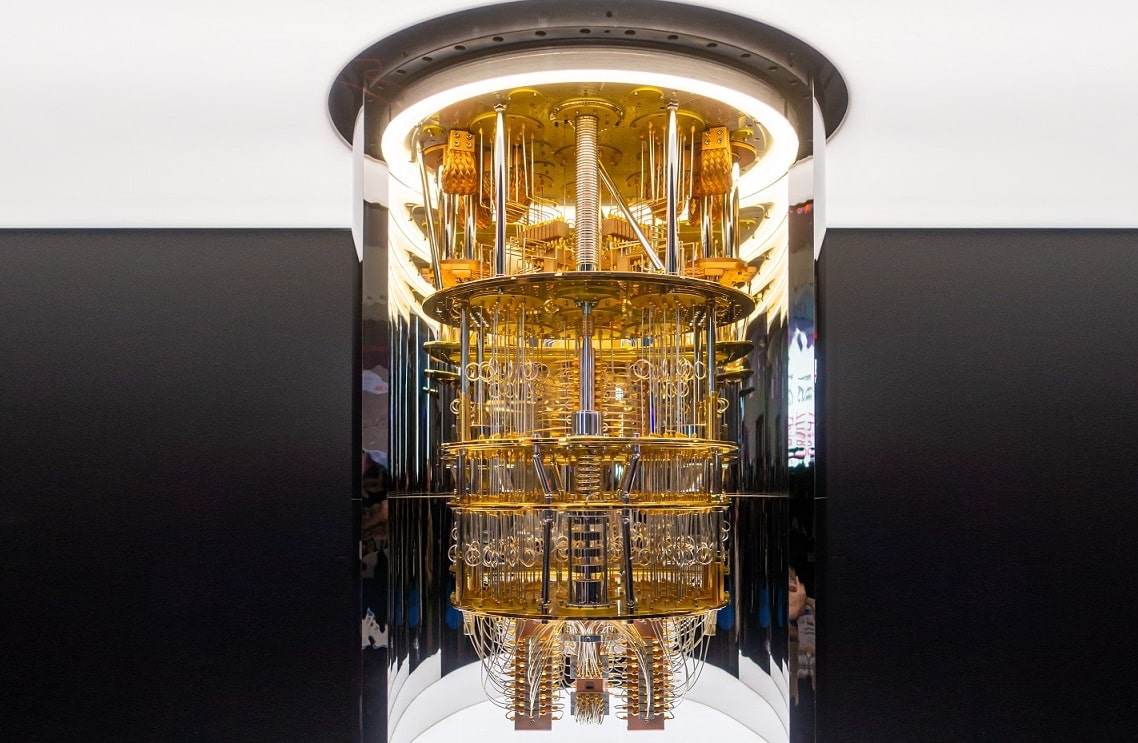
Why Post-Quantum Cryptography (PQC) Matters
Challenges in Adopting Post-Quantum Cryptography
Classical PKI vs Post-Quantum PKI

How to Prepare Your Organization for PQC
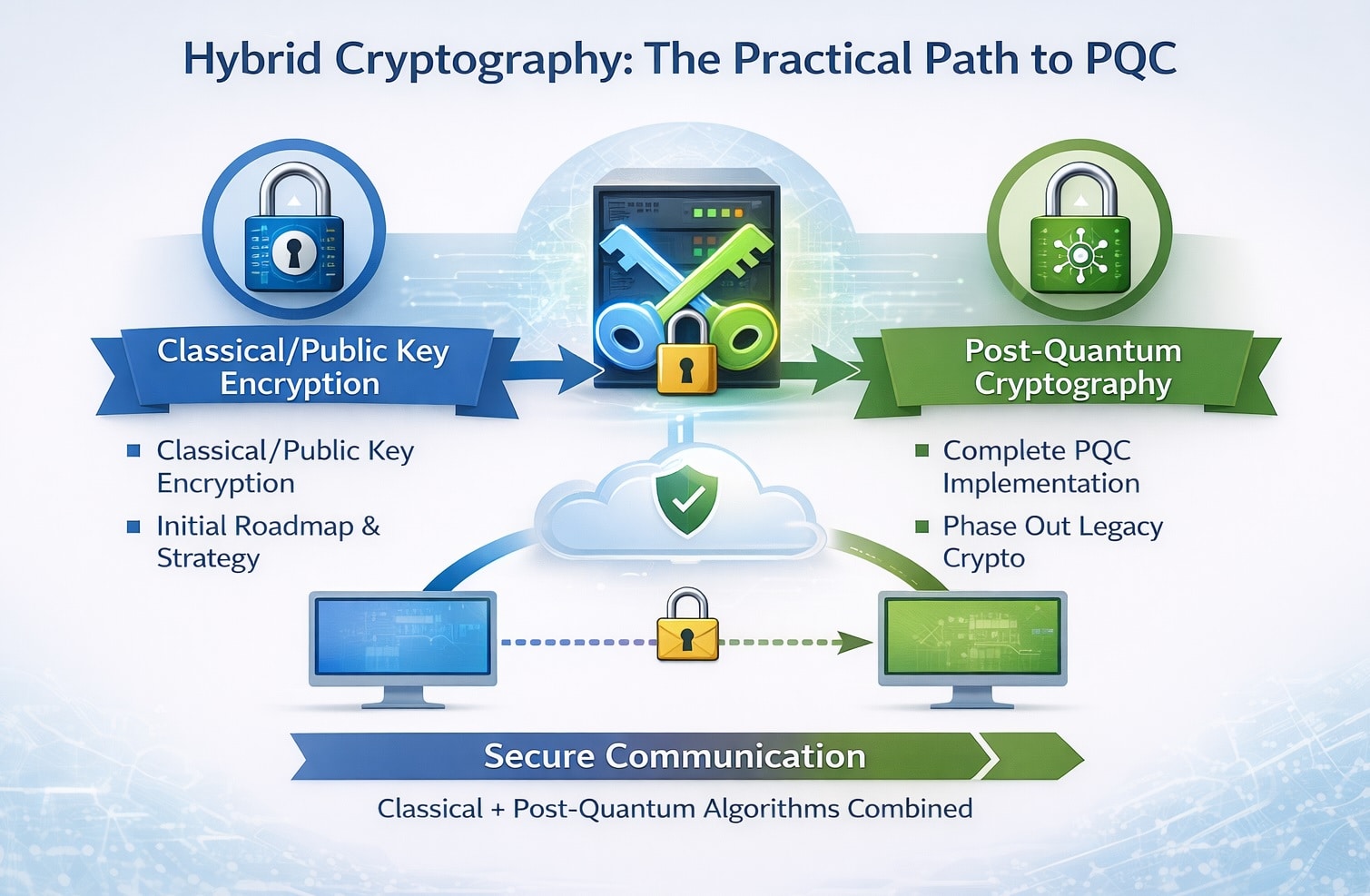
Hybrid Cryptography: The Practical Path to PQC